At Testlify, engineering time tracking relied on an expensive third-party application that was disconnected from daily Jira workflows. I led the frontend development of Timesheets by Appforest, an integrated Jira application for time tracking, team capacity planning, and project cost allocation. The product is published on the Atlassian Marketplace and deployed internally across the company.
What I built
- Atlassian Marketplace integration: Built on Atlassian Forge, Atlassian's sandboxed serverless app runtime, with tightly scoped, least-privilege Jira read/write permissions rather than a self-hosted backend.
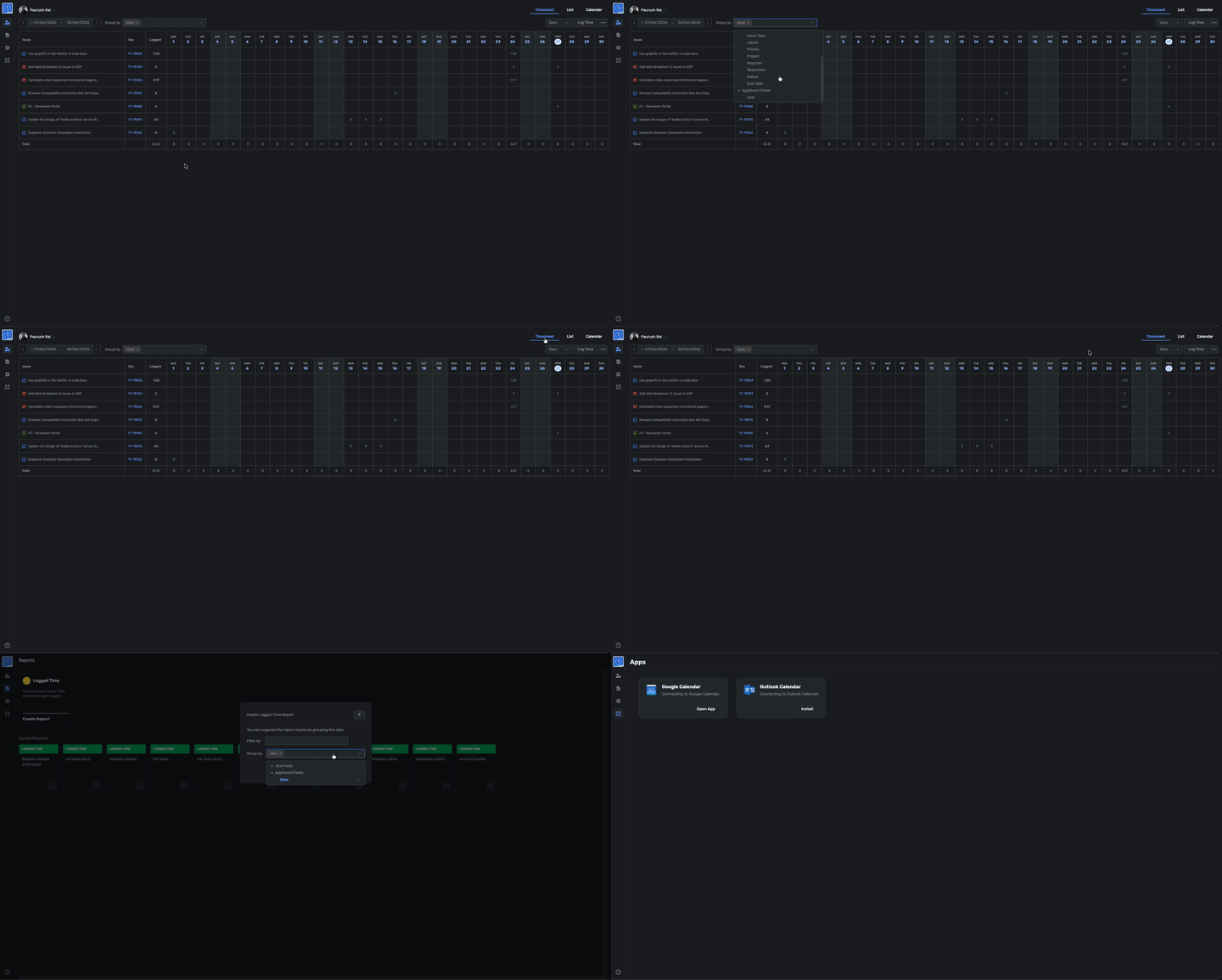
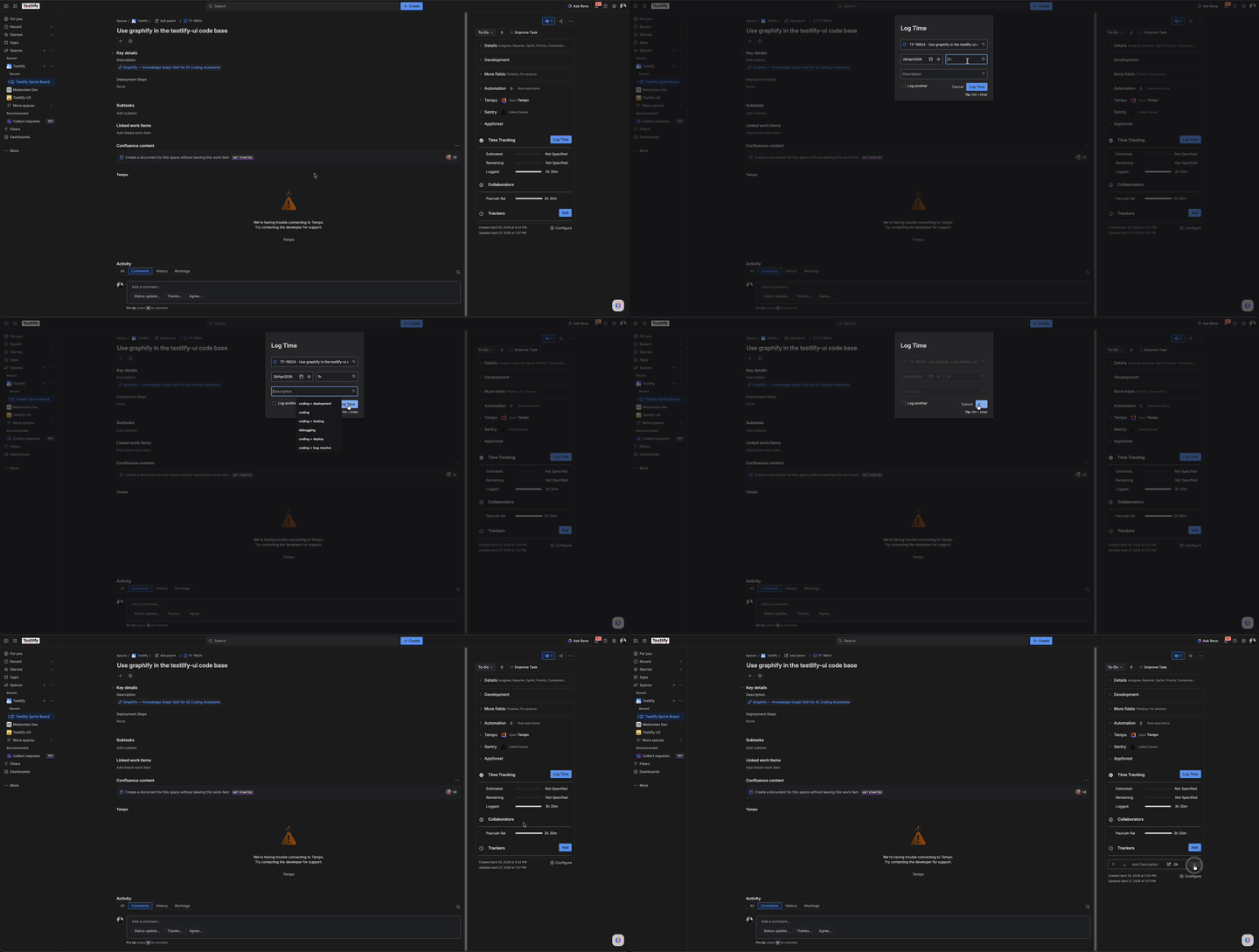
- Embedded Jira interface: A time-logging panel embedded directly in Jira issues for quick entries, plus a full dashboard app for calendar views and daily/weekly timesheet submissions, without context switching.
- Reporting and analytics: Report views combining Jira and internal time-log data for sprint accounting and project cost tracking.
Why it mattered
Published on the Atlassian Marketplace for external customers, the plugin also replaced our legacy time-tracking software internally, saving $9,000+ in annual licensing costs and giving leadership real-time visibility into engineering allocations.
Team & Ownership
I led frontend development on a small team: 397 commits from 4 contributors since mid-2024, still actively maintained today. This is a multi-year, multi-person product, not a solo build, and my role was frontend-scoped rather than full-stack ownership.
Forge, Not Connect
The app runs on Atlassian Forge, a sandboxed serverless runtime, not the older Connect framework (a self-hosted app with its own backend, communicating with Jira over iframes and webhooks). Forge means no server to run or patch for the Jira-facing surface: Atlassian hosts the execution environment, enforces the permission scopes declared in the manifest, and imposes serverless-style constraints (Node 22 on ARM64, 1024MB memory, bounded execution time per invocation) rather than leaving that infrastructure to us.
Two Surfaces for Two Different Intents
The product deliberately splits into two UIs instead of one. An issue-context panel handles the common case: log time against the ticket you're already looking at, in one click, without leaving it. A separate full dashboard app (calendar views, reports, admin settings, cost tracking) handles planning and oversight, the tasks that need a real workspace rather than a sidebar panel. Each surface is built for the job it does rather than forcing one interface to do both.
A Real Cross-Project Integration
This isn't an isolated app. Resolver functions explicitly ingest and clear time-entry suggestions sourced from Google Calendar, Outlook Calendar, and the companion Appforest Timetracker VS Code extension, so a developer's coding activity in VS Code can surface here as a suggested timesheet entry instead of requiring manual re-entry.
Data Model & Scale
- Forge permission scopes are narrow and explicit (
read:jira-work,write:jira-work,manage:jira-configuration, plus user/token reads), not a broad catch-all grant. - UI components use Atlassian's own design tokens (
@atlaskit), so the plugin visually matches native Jira instead of reading as a bolted-on third party. - The dashboard app is Vue 3 with Pinia for state, 46 components, separate from the React-based issue-context panel; two frontend stacks in one product, not one shared codebase artificially stretched across both surfaces.
- The Forge function's memory allocation was raised from 256MB to 1024MB after a real performance problem, not set to 1024MB as an initial default.
The reporting engine behind those cost/sprint views scales its own query strategy: it chunks Jira JQL search requests at 25, 50, or 100 issues per call depending on report volume, pulling 16 fields per issue, rather than firing one request per issue or a single unbounded query that risks timing out on a large sprint.
Build vs. Buy
Forge over a self-hosted Connect app: Atlassian's runtime and permission model replace infrastructure this team would otherwise build and secure itself. Native Atlassian design tokens over a custom UI kit: the plugin inherits Jira's own look and interaction patterns instead of maintaining a parallel design system just for this app.
Stack
Atlassian Forge (Node 22, ARM64), React 18 for the issue-context panel, Vue 3 with Pinia for the dashboard app, Atlassian Design System tokens and primitives, deployed via the Atlassian Marketplace.